
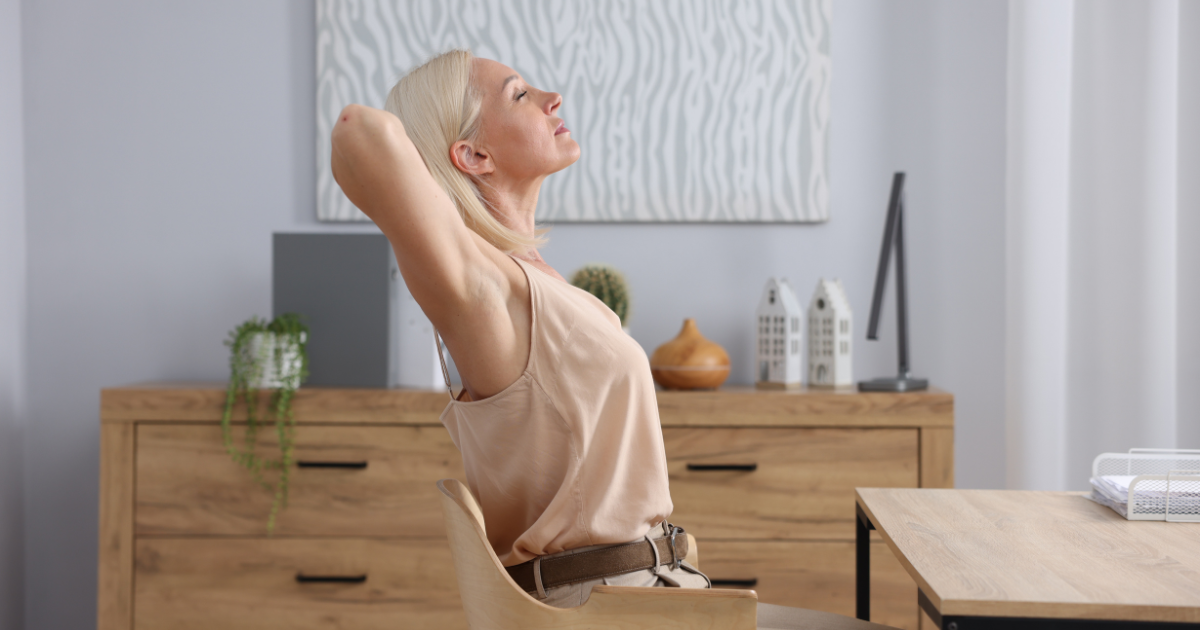
Flex Studio is built on 6 Classical Pilates principles — Breath, Centering, Concentration, Control, Precision and Flow. They are not slogans. They shape every Reformer, Apparatus and Mat session, and the same ideas travel into how you sit, stand, lift and walk. Learn them in the studio first, then take them home.
6 Classical Pilates Principles that run every session
These classical pilates principles are not a warm-up speech. They are the way the method is practised:
- Breath — the rhythm of effort and release.
- Centering — moving from the middle, not from the edges.
- Concentration — giving the exercise the attention it needs.
- Control — choosing the movement rather than throwing it.
- Precision — small, honest adjustments instead of approximate shapes.
- Flow — connecting one exercise to the next without losing quality.
Breath — the metronome you take to the MTR
- In the studio. Breath is the metronome of the exercise, not a separate ritual. Inhaling and exhaling give the movement a beginning, a middle and an end. Your instructor may ask you to coordinate a lift with an exhale, or keep the ribs soft while the breath still moves.
- In daily life. On the MTR, a quieter inhale and a complete exhale can soften the shoulders — a practical check, not a prescription.
Centering — find your middle before the email sprint
- In the studio. Movement organises from the middle, so the limbs can work without dragging the spine out of shape. On the Reformer, it keeps Footwork from becoming a leg press. On the Mat, it is the difference between a rolling exercise that stays round and one that thuds.
- In daily life. Before you sprint through an inbox, feel both feet. Finding your middle is not a rigid brace — enough tone to support you, enough ease to keep working.
Concentration — one thing at a time, on purpose
- In the studio. Notice where the weight is in the foot, whether the neck is helping too much, whether the carriage is closing because you chose it. That concentration is not grim — simply undivided.
- In daily life. Walk the last block without scrolling, or lift a bag while noticing both hands and both feet. One thing, done on purpose, often leaves you less scattered than five things done roughly.
Control — strength without slamming the spring
- In the studio. Control is strength with manners, not caution. You close the Reformer carriage because you can, not because it slammed home. Effort is welcome; thrash is not.
- In daily life. When you pick up a bag or walk downstairs, keep the movement even, instead of heaving, twisting or dropping into the foot.
Precision — small adjustments, a clearer practice
- In the studio. A few degrees in the pelvis, or a neck that stops reaching forward, and the same exercise suddenly makes sense. That is why Flex keeps rooms small: Reformer classes are capped at four people, and Apparatus classes at three to four.
- In daily life. Line up the screen so you are not peering from one side all afternoon. If desk hours fill your week, see desk stiffness and simple posture cues.
Flow — when the sequence begins to feel like music
- In the studio. Flow is continuity, not rushing: the other five principles start talking to one another, and one exercise can hand you to the next.
- In daily life. An even stride after a long meeting, or standing up without a sudden heave.
Studio to street: a one-day practice map
An illustrative sketch — not a programme or medical recommendation. If a day swallows the list, keep one item:
- Morning. By the bed or the kettle, take two or three unforced breaths and feel both feet.
- The commute. On the MTR or in a rideshare, notice whether you are holding your breath or gripping the phone with your whole shoulder girdle.
- At the desk. Find your middle on the chair and let the screen come to you.
- Lifting bags or a laptop. Pause, organise the centre, and lift with control rather than a twist-and-heave.
- Evening. Repeat a few familiar Classical Mat exercises you have already learned with a teacher — or let a session at Flex do that work with you.
Learn the Classical Pilates Principles with a certified teacher
Read more: What to Expect in Your First Class at Flex Studio?
Frequently asked questions
What are the 6 Classical Pilates Principles?
Breath, Centering, Concentration, Control, Precision and Flow. They describe how Classical Pilates is practised on the Reformer, Apparatus and Mat — and how the same attention can travel into ordinary movement.
Can I practise Classical Pilates Principles without equipment?
Yes, in a simple way. Breath, centering and control can be noticed while you sit, walk or lift a bag. They become clearer with a teacher in the studio. Home awareness supports practice; it does not replace it.
Which Classical Pilates Principle should beginners focus on first?
Breath and centering are a sound place to start. A Flex instructor will emphasise what your body needs on the day. All six principles are present from the first well-taught session.
How do the Classical Pilates Principles show up in a Reformer class?
Breath sets the rhythm of the springs, centering stops the legs and arms stealing the exercise, and control keeps the carriage from slamming. Concentration and precision refine each shape; flow connects the sequence.
Is this the same as mindfulness or physiotherapy?
No. Classical Pilates is an intelligent movement method, not a mindfulness course or a medical programme. If you have an injury or a clinical condition, speak with your healthcare provider and contact the studio before you book.
Where can I learn Classical Pilates Principles at Flex Studio?
In Private sessions, Reformer and Apparatus classes, and Mat work at Flex in Hong Kong (Central and One Island South) and Singapore (Orchard, Palais Renaissance). A Private Assessment is the most useful first step if you are new to Flex.