
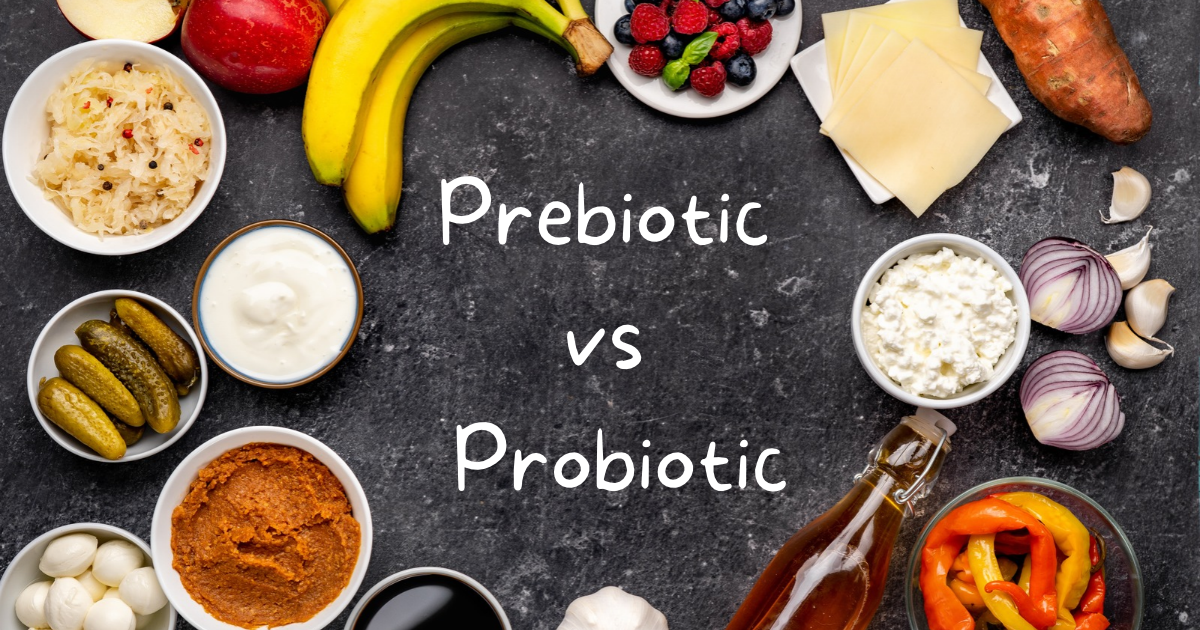
“Prebiotic” and “probiotic” sound similar, but they play different roles in gut health. Understanding the difference can help you make more informed choices about food, supplements and everyday habits.
Quick definitions
What are probiotics?
Probiotics are live microorganisms, such as certain bacteria and yeasts, that may provide a health benefit when consumed in adequate amounts.
What are prebiotics?
Prebiotics are non-digestible food components that selectively support the growth or activity of beneficial microorganisms in the gut.
Why both matter for gut health?
A varied diet that includes both fibre-rich plant foods and, if enjoyed, fermented foods can support a more diverse and balanced approach to gut health.
Key differences
Function in the gut
- Probiotics: introduce or replenish live microorganisms.
- Prebiotics: feed beneficial microbes already present in the gut.
Where they come from?
- Probiotics: fermented foods and some supplements.
- Prebiotics: fibre-rich plant foods and some supplements.
How they work together?
When probiotics and prebiotics are combined, the combination is sometimes called a synbiotic. The idea is that prebiotics may help support the microbes introduced by probiotics.
Common food sources
Probiotic‑rich foods
- Yogurt with live active cultures
- Kefir
- Kimchi
- Sauerkraut
- Miso
- Tempeh
- Some fermented cheeses and kombucha
Prebiotic‑rich foods
- Garlic, onions and leeks
- Asparagus
- Bananas and apples
- Oats and whole grains
- Beans, lentils and peas
- Cooked-then-cooled potatoes or rice
- Flaxseed and other fibre-rich plant foods
Everyday meal ideas combining both
- Yogurt with banana and oats
- Miso soup with vegetables and tofu
- Kimchi with rice and eggs
- Lentil salad with garlic, onion and leafy greens
- Overnight oats with kefir, banana and flaxseed
Everyday gut‑health habits for active people
Hydration, fibre, sleep and stress management
Gut health is supported by overall lifestyle patterns, not one single food. Aim for varied plant foods, adequate fluids, regular meals, sufficient sleep and manageable stress levels.
How gut health relates to energy and recovery for Pilates clients?
There is no single food that guarantees better performance or recovery. However, consistent, balanced eating can support how you feel before and after Pilates sessions.
Who should seek tailored guidance
Immunocompromised, seriously ill or pregnant individuals
People who are immunocompromised, seriously ill, pregnant or managing a medical condition should seek individual guidance from an appropriate healthcare professional before making supplement decisions.
People managing a medical condition or persistent digestive symptoms
If you have ongoing digestive symptoms, do not rely on supplements or online advice alone. Speak with a qualified healthcare professional.
How this fits with your Pilates practice
Fueling before and after classes
Focus on meals and snacks that you tolerate well, provide steady energy and fit your schedule. There is no need to overcomplicate pre- or post-class eating.
Supporting recovery and consistency with simple habits
Consistency matters more than perfection. Small, repeatable habits—such as including vegetables, whole grains, legumes or fermented foods—can be easier to maintain than strict rules.
Book Now @ Hong Kong Central Studio
Book Now @ Hong Kong One Island South Studio
View Promotions (Hong Kong)
Book Now @ Singapore Orchard Road Studio
View Promotions (Singapore)